Smart Switches 2026 — Lutron Caseta vs Leviton Decora Smart vs GE Cync
Compared on neutral wire requirements, hub vs hubless design, Matter and HomeKit support, dimmer compatibility, and rental-friendliness across Lutron Caseta, Leviton Decora Smart, and GE Cync.
The smart bulb versus smart switch debate has matured: most experienced smart-home installers now favor smart switches as the default for whole-home automation. Switches control the entire circuit, work with any bulb the existing fixture supports, and survive the inevitable moment when a guest reaches for the wall plate by reflex. Smart bulbs remain useful for color and per-fixture control, but the wall switch wins on reliability for most rooms.
This article compares the three brands that dominate the U.S. smart switch market — Lutron Caseta, Leviton Decora Smart, and GE Cync — on the criteria that determine which one fits your house: neutral wire requirements, ecosystem support, hub-or-hubless design, and the practical install considerations that catch buyers off-guard.
- Neutral wire — what it is and how to check before buying
- Hub vs hubless designs (Lutron Caseta’s approach vs Matter-direct alternatives)
- LED dimmer compatibility — the most common installation surprise
- 3-way and 4-way switch wiring options
- Top picks by home age and ecosystem need
The neutral wire question
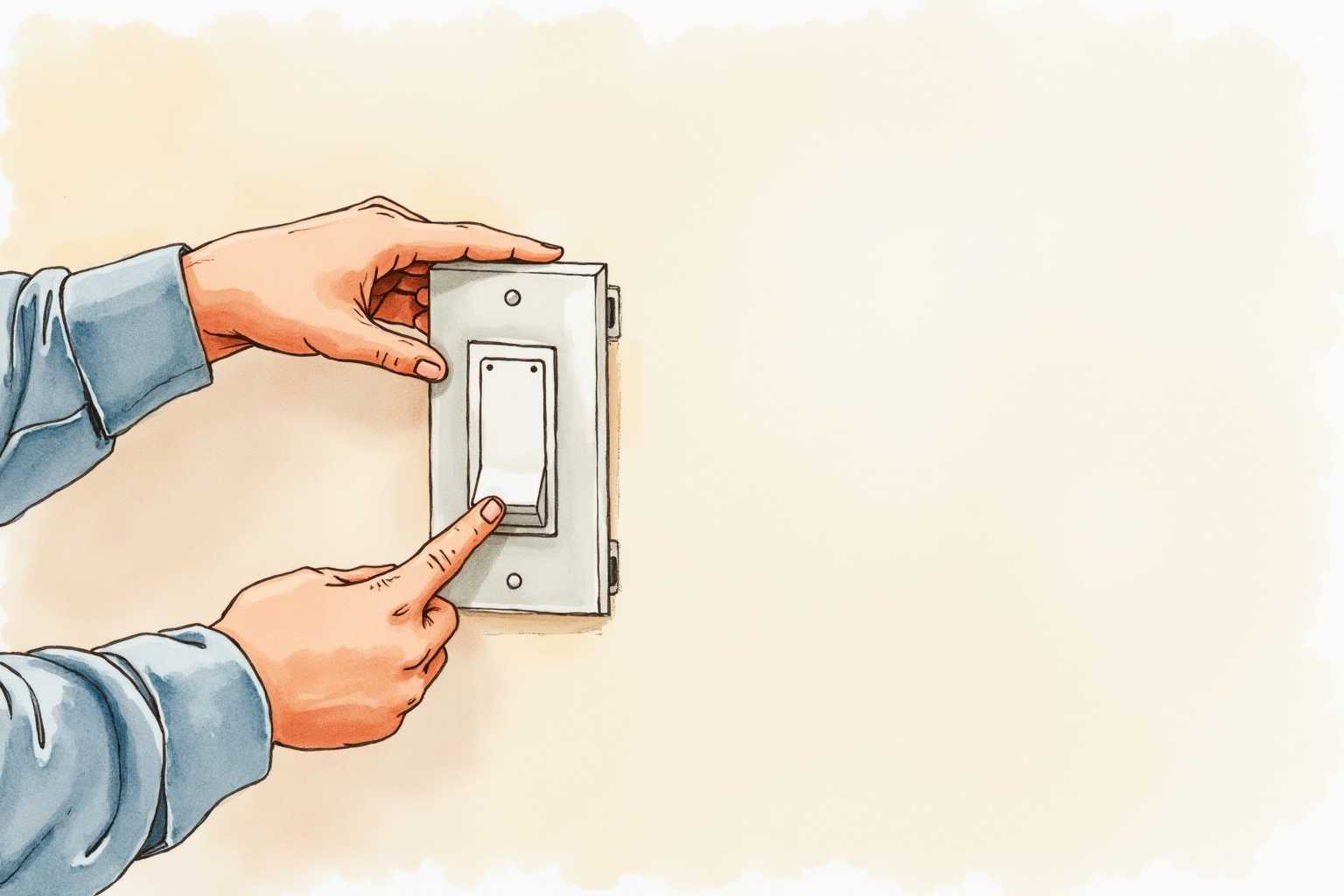
Before any other consideration, check whether your existing wall switches have a neutral wire. Open the switch box (with power off at the breaker), and look for a bundle of white wires capped with a wire nut, typically in the back of the box. If those white wires are present, you have a neutral. If you only see black (hot) and bare or green (ground) wires, you do not.
Most smart switches require a neutral to power their electronics. Lutron Caseta is the major exception — its design works without a neutral, which makes it essentially the only mainstream option for older homes (typically pre-1985) where neutrals were never run to switch boxes. This single technical factor is why Lutron Caseta dominates the older-home installation market.
For newer construction (1985+) where neutrals are standard, the field opens to Leviton Decora Smart, GE Cync, and other neutral-required brands.
Hub-based versus Matter-direct designs
The two major design philosophies in modern smart switches:
Lutron Caseta — hub-based with proprietary radio. Switches communicate over Lutron’s Clear Connect RF protocol (not WiFi) to a small Caseta Smart Bridge that connects to your router. Benefits: very fast local response, low-power radio (Pico companion remotes run for years on a coin battery), entire system works if your internet is down. The hub is a $50-80 one-time purchase that supports an unlimited number of Caseta devices.
Matter-direct switches (newer Leviton Decora Smart, recent GE Cync Matter SKUs). Switches connect over WiFi or Thread and speak Matter directly to your existing ecosystem. No additional hub needed if you already have an Apple HomePod mini, Google Nest Hub, or SmartThings Station. Trade-offs: WiFi-based switches use your router’s device slots, response is slightly slower than Caseta’s local radio.
For a single room of smart switches, Matter-direct is simpler — no hub to buy. For whole-home installs (15+ switches), Caseta’s hub-based architecture often ends up more reliable because every Caseta switch communicates over the same dedicated low-power radio rather than sharing WiFi airspace with phones, laptops, and streaming devices.
LED dimmer compatibility
The single most common installation problem is a mismatch between the smart dimmer and the LED bulbs it controls. Buzzing dimmers, flickering at low brightness, or bulbs that never reach full brightness all trace to dimmer-bulb incompatibility.
Lutron publishes a tested-bulb compatibility list — picking dimmable LED bulbs from that list essentially eliminates the problem. Leviton and GE Cync are catching up with similar compatibility documentation.
The pattern that works:
- Choose the smart dimmer first
- Check the manufacturer’s compatibility list for tested LED bulbs
- Buy bulbs from the tested list (or stick with the dimmer brand’s own bulbs)
Older incandescent and halogen bulbs work universally with any dimmer. LED bulbs are where the friction lives. CFL bulbs are not generally dimmer-compatible regardless of switch.
3-way and 4-way wiring
If your existing light is controlled from two switches (typical for stairwells and hallways), that is a 3-way circuit. Three or more switches make it a 4-way circuit. Smart switch 3-way wiring is more complex than single-pole.
Three approaches:
-
Replace the primary switch with a smart switch and the companions with manufacturer-specific dummy switches (Lutron Caseta uses Pico Remotes; GE Cync sells dedicated add-on switches). The smart switch is the brain; the companions are wireless or low-voltage signals.
-
Replace all positions with smart switches that coordinate over the network. More expensive but cleaner — every switch position has the same look and feel.
-
Replace only the primary switch and accept that the secondary switches no longer work. This is a downgrade and is not recommended; family members reach for the secondary switch out of habit.
Caseta’s Pico companion approach is the most elegant and is one of Caseta’s enduring strengths. The Pico Remote looks identical to the main switch but uses a battery and the Caseta radio, requiring no wiring at all.
Top picks by home configuration
Lutron Caseta Smart Switch Starter Kit (with Smart Bridge)
Price · $130-180 starter kit — best whole-home pick
+ Pros
- · No neutral wire required — works in older homes
- · Proprietary Clear Connect radio — fastest local response
- · Pico remote companion for 3-way and 4-way switches without wiring
− Cons
- · Requires Smart Bridge hub ($50-80 one-time)
- · Premium per-switch price — adds up across whole-home install
Paid affiliate link. Price, availability, and ratings can change; verify details on the retailer page before buying.
Leviton Decora Smart Switch (Matter, Wi-Fi)
Price · $40-55 per switch — best mainstream Matter pick
+ Pros
- · Matter-certified — works natively with Apple Home, Google, Alexa, SmartThings
- · No hub required if you already have a Thread border router or Matter controller
- · Standard Decora form factor matches existing décor
− Cons
- · Requires neutral wire (most post-1985 homes have it)
- · WiFi-based — adds to your router device count
Paid affiliate link. Price, availability, and ratings can change; verify details on the retailer page before buying.
GE Cync Smart Switch (Wire-Free Dimmer or Hardwired)
Price · $35-50 per switch — budget option
+ Pros
- · Lowest unit price among the three brands
- · Recent Matter-certified SKUs widely available
- · Wire-Free Dimmer variant uses battery — no rewiring needed
− Cons
- · Brand transition from GE to Savant Systems creates some uncertainty
- · Compatibility documentation thinner than Lutron
Paid affiliate link. Price, availability, and ratings can change; verify details on the retailer page before buying.
The recommendation by home type
For older homes (pre-1985, no neutral wires typical) → Lutron Caseta is essentially the only viable choice. Start with the Caseta Smart Bridge Pro starter kit, add Pico companions for 3-way and 4-way locations, and expand from there.
For newer homes with neutrals → either Caseta or a Matter-direct brand. Caseta offers the best radio reliability and Pico companions, but at a higher per-switch cost. Leviton Decora Smart with Matter is the cleanest Matter-direct path; GE Cync is the budget version of the same approach.
Avoid mixing brands within the same room or circuit — each manufacturer’s 3-way companion devices are brand-specific. Consistent brand choice per room simplifies the troubleshooting if something behaves unexpectedly.
For rentals → consider Lutron Caseta with the wire-free Pico installation in some configurations. The Pico Remote can be wall-mounted with a magnetic plate (no drilling) and removed cleanly when moving out. Smart bulbs and smart plugs cover the rest of the rental smart-home setup without permanent wiring changes.
A smart-switch retrofit done correctly outlasts most other smart-home upgrades. The bulbs change, the speakers go obsolete, the apps shift over time, but the wall switches are still on the wall and still working a decade later. The longevity argues for buying once at the right quality level rather than re-buying cheap units every few years.