Does a Smart Thermostat Actually Pay Back? — Real Energy Data, Not Marketing
Manufacturer claims 'save 23% on heating'. ENERGY STAR field data says 8%. Here is what the actual studies show, the honest payback period, and when a smart thermostat is not worth it.
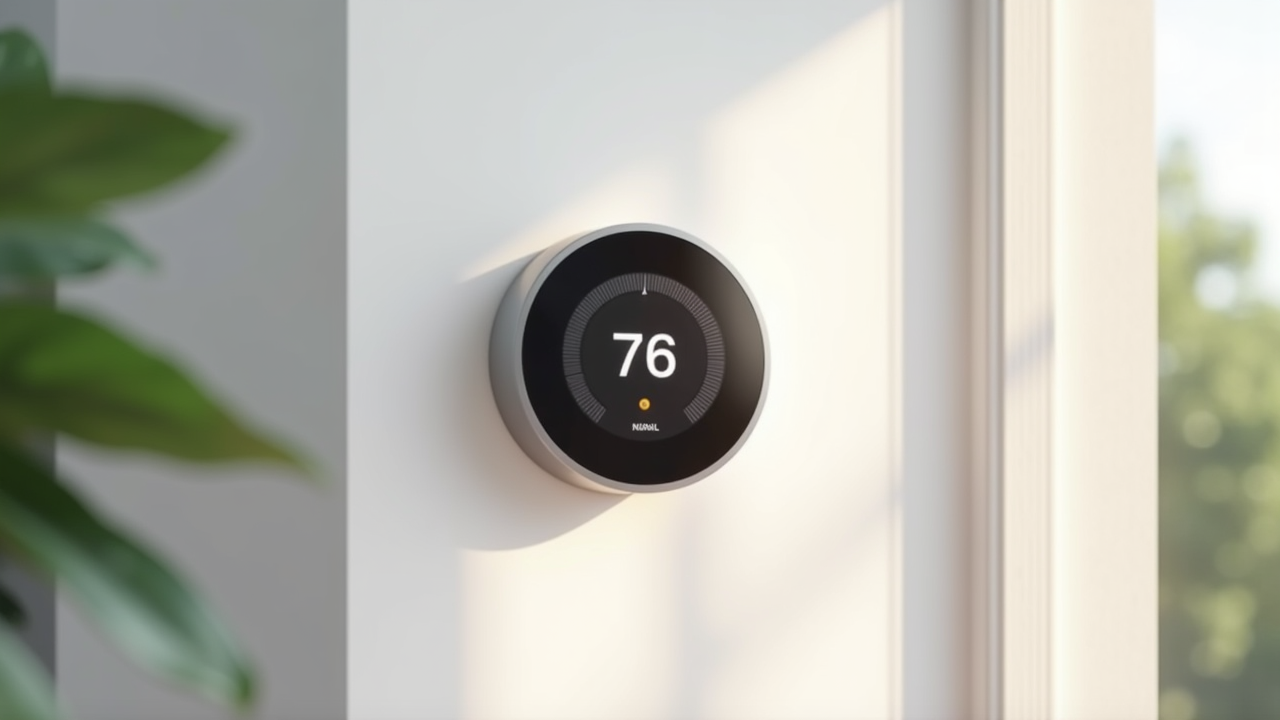
The box says “save up to 23% on heating costs”. The retailer adds a $50-off rebate, throws in a smart-plug starter kit, and promises payback in a year. By the time you wire the thing in and watch your next bill arrive, the savings are real but smaller than expected — and you start wondering whether the gadget was worth the upgrade or whether you just bought yourself a fancy display.
This article works through what the actual field studies — ENERGY STAR, the U.S. Department of Energy’s Building America program, Lawrence Berkeley National Laboratory, and California’s PUC — show about smart thermostat ROI. The summary up front: the savings are real but considerably smaller than the marketing figures, and the payback math depends on your starting point.
- Marketing claims (23%) vs ENERGY STAR field data (8–10%)
- Honest payback periods by household type
- Which features actually save energy and which are theatre
- When a smart thermostat is not worth the upgrade
The honest savings number
Manufacturer studies typically report 12–23% HVAC savings. ENERGY STAR’s product certification, which requires independent field-data analysis, lands much lower: roughly 8% on heating and 10% on cooling for the average U.S. household.
The gap is not deception — it is study design. Manufacturer studies often compare smart thermostats against households without any programming, or against poorly-set programmable thermostats. ENERGY STAR’s analysis compares against the realistic baseline: a household that already had some kind of programmable schedule.

In dollar terms for a typical U.S. household with a $1,200 annual HVAC bill:
| Source | Claimed savings | Annual $ savings |
|---|---|---|
| Manufacturer marketing | 12–23% | $144–$276 |
| ENERGY STAR field data | 8–10% | $96–$120 |
| Already-efficient home | 0–5% | $0–$60 |
Payback periods, honestly
Smart thermostats run $150–$250 retail. Installation is usually DIY (about an hour of YouTube and a screwdriver) but can run $100–$200 if you hire a pro for a complex HVAC setup.
| Household type | Annual savings | Payback |
|---|---|---|
| Typical, irregular schedule | $90–$130 | 1.5–3 years |
| Typical, regular schedule | $50–$80 | 3–5 years |
| Already-efficient (Energy Star home) | $0–$50 | Often never |
| Time-of-use rates + demand-response rebate | $200–$300 | 6–12 months |
The fastest payback comes from utility demand-response programs. Many U.S. utilities offer $50–$150 rebates on smart thermostats plus ongoing bill credits ($25–$75/year) for participating in summer peak-demand events. Stack a manufacturer rebate on a utility rebate and the device sometimes effectively costs $20–$50.
What features actually save energy

Field studies consistently identify the same short list of features that drive actual savings:
The single largest contributor. Learns your patterns and sets back during empty hours.
Setback when phones leave home, recovery when they return. Material savings for irregular schedules.
Pre-cools or pre-heats off-peak. Major savings only on TOU rate plans.
Utility shifts cycles during peak events in exchange for credits.
Features that save almost nothing: voice control, color touchscreen, smart-home dashboards, weather adjustment, motion sensors for room-level zoning (unless paired with multi-zone HVAC). These are conveniences. They do not move the meter.
Sensors and zoning — when it adds up
Some smart thermostats (ecobee, Honeywell T9) include remote room sensors that average temperatures across the home. The savings claim is that you stop overheating your living room to make the bedroom comfortable.
Field reality: the gain is small unless your home already has multi-zone HVAC. In a single-zone furnace setup, sensors mostly redistribute discomfort rather than eliminate energy use. Worth it for comfort, not primarily for savings.
The ROI math, plainly

A 60-second worksheet to check whether it pays for you:
- Pull last 12 months of HVAC-related bills. Estimate what fraction is heating/cooling — for most U.S. households 40–60%.
- Multiply by 8% (heating) and 10% (cooling) to get expected annual savings.
- Subtract net device cost after rebates (manufacturer + utility).
- Divide cost by annual savings for payback in years.
If your HVAC bill is under $600/year (mild climate, small home, or already efficient), the device may never pay back on energy alone. Buy it for convenience, not ROI.
When not to buy one
- Already running a programmable thermostat with disciplined schedules
- All-electric resistance heating in a poorly-insulated home (the structural fix matters more)
- Window unit AC and no central HVAC (smart thermostats work with central systems)
- Seasonal home occupied less than 4 months a year
- Heat pump without verified compatibility (risk of triggering expensive backup heat)
Buy criteria, in order of importance
- Compatibility with your HVAC: heat pump, multi-stage, dual-fuel, etc. Use the manufacturer’s compatibility tool, not a generic spec sheet.
- Utility rebate eligibility: a $100 rebate flips a marginal device to clearly worth-it.
- Demand-response program participation: ongoing credits.
- Geofencing reliability: read recent reviews specifically about whether it correctly detects departure/arrival.
- Privacy posture: read the policy if data sharing matters to you.
Skip the brand wars. ENERGY STAR–certified models are within a few percent of each other on actual savings.
Top picks by ROI (2026 — ENERGY STAR certified)
Based on the criteria above — heat-pump compatibility, utility rebate eligibility, and field-tested geofencing — three models cover ~90% of typical buyers. Affiliate links to Amazon below; prices fluctuate so verify before purchase.
Google Nest Learning Thermostat (3rd Gen, Stainless Steel)
Price · $249 list (often $189–$219 on sale)
+ Pros
- · Auto-scheduling: industry-leading learning algorithm
- · Energy Star certified, supports demand-response programs
- · Works with most utility rebate programs ($50–$100 typical)
− Cons
- · Data integrated with Google ecosystem (privacy consideration)
- · Heat-pump compatibility requires C-wire on most setups
Paid affiliate link. Price, availability, and ratings can change; verify details on the retailer page before buying.
ecobee SmartThermostat with Voice Control
Price · $249 list (often $179–$219 on sale)
+ Pros
- · Includes 1 remote room sensor (useful for multi-zone comfort)
- · Verified heat-pump support with proper aux-heat lockout
- · More conservative data-sharing posture vs Nest
− Cons
- · Voice control feature is convenience, not energy savings
- · Geofencing reliability slightly behind Nest in some reviews
Paid affiliate link. Price, availability, and ratings can change; verify details on the retailer page before buying.
Honeywell Home T9 (with remote sensor)
Price · $199 list (often $149–$179 on sale)
+ Pros
- · Best value of the three — strong rebate eligibility
- · Bundled remote sensor included
- · Solid heat-pump support across most HVAC configurations
− Cons
- · App UX feels slightly dated vs Nest/ecobee
- · Auto-scheduling less aggressive than Nest learning model
Paid affiliate link. Price, availability, and ratings can change; verify details on the retailer page before buying.
All three are ENERGY STAR certified and within 1–2% of each other on actual measured savings — the choice mostly comes down to ecosystem fit (Nest if you have Google Home, ecobee if you have HomeKit, Honeywell if budget matters most) and which qualifies for your local utility’s largest rebate.
A smart thermostat is a useful tool, not a silver bullet. The 23% number is marketing; 8–10% is reality. With a utility rebate, the math often works out; without one, the payback can take half a decade. The honest version is more interesting than the brochure: in a typical home it saves a coffee shop’s worth of money each month, with the right rate plan it can save a phone bill, and in a small or efficient home it might not save anything at all.
Questions or corrections — [email protected]. All quoted figures are linked to primary sources above.