Smart Bulbs Compared — Philips Hue vs Wyze, Sengled, and Others (Real Lumens and Reliability)
Philips Hue costs 4x competitors. Are the lumens, color accuracy, and ecosystem worth it? Wirecutter testing data and 5-year reliability comparison.

The smart bulb market splits neatly into “premium ecosystem” (Philips Hue) and “good enough cheap” (Wyze, Sengled, Govee, others). The price ratio is dramatic: Hue color bulbs at $40-50 each versus Wyze at $14-18. Whether the premium is worth it depends entirely on scale, ecosystem, and how much you value app polish. This article walks through the actual data from Wirecutter long-term testing, Consumer Reports surveys, and ENERGY STAR specifications to make the trade-offs explicit.
The TL;DR: for 1-3 bulbs in one room, Wyze captures 80% of the experience for 25% of the cost. For 15+ bulbs across a whole home with automations, scenes, and motion sensors, Hue’s ecosystem premium pays back in reliability and features.
For the broader smart-home decision context, see the smart thermostat ROI and smart lock comparison posts.
What “smart” actually means
A smart bulb adds three capabilities over a standard LED:
- Wireless control — turn on/off, dim, change color from phone or voice
- Scheduling and automation — schedules, sunrise/sunset triggers, motion-based, etc.
- Integration — voice assistants, smart home hubs, third-party automations
The bulb LED itself is the same technology either way (high-efficiency phosphor-coated LED with driver circuit). The “smart” adds:
- Microcontroller (Wi-Fi or Zigbee or Bluetooth)
- App and cloud service
- Firmware
Standby power draw: 0.1-0.3W per bulb (always on, listening). Annual cost per bulb at $0.15/kWh: $0.15-0.45.
Top picks (Wirecutter + Consumer Reports composite)
1. Philips Hue White & Color Ambiance (premium pick)
- Price: $45-55 per A19 bulb; starter kit (2 bulbs + Bridge): $130-160
- Lumens: 800-1100 (60W-equivalent)
- CRI: 80-90 (best in class)
- Connectivity: Zigbee (Bridge required for full features), Bluetooth direct (limited)
- Ecosystem: Hue app (best in class), Alexa, Google, Apple Home, IFTTT, SmartThings
- Best for: Whole-home setups, color-critical applications, long-term investment
2. Wyze Color Bulb (best value)
- Price: $14-18 per A19 bulb; multi-packs cheaper
- Lumens: 800
- CRI: 75-80
- Connectivity: Wi-Fi 2.4GHz, no bridge needed
- Ecosystem: Wyze app, Alexa, Google
- Best for: Single-room or starter setups, budget-conscious users
3. Sengled Smart Bulbs (Zigbee or Wi-Fi versions)
- Price: $12-25 per bulb depending on variant
- Lumens: 800
- CRI: 80
- Connectivity: Wi-Fi (no hub) or Zigbee (works with Hue Bridge or SmartThings)
- Ecosystem: Sengled Home, Alexa, Google, Apple Home (Wi-Fi version)
- Best for: Bridging budget price with hub-based reliability
4. Govee Smart LED Bulbs (RGBIC color)
- Price: $15-25 per bulb
- Lumens: 800-1000
- CRI: 75-85
- Connectivity: Wi-Fi + Bluetooth
- Ecosystem: Govee Home, Alexa, Google
- Best for: Color-effects enthusiasts, music-sync, dynamic scenes (Govee leads on color effects)
5. Cync (formerly C by GE)
- Price: $15-30 per bulb
- Lumens: 800
- CRI: 75-85
- Connectivity: Bluetooth + Wi-Fi
- Ecosystem: Cync app, Alexa, Google
- Best for: Existing GE/Cync household, simple setups
CRI — color rendering matters
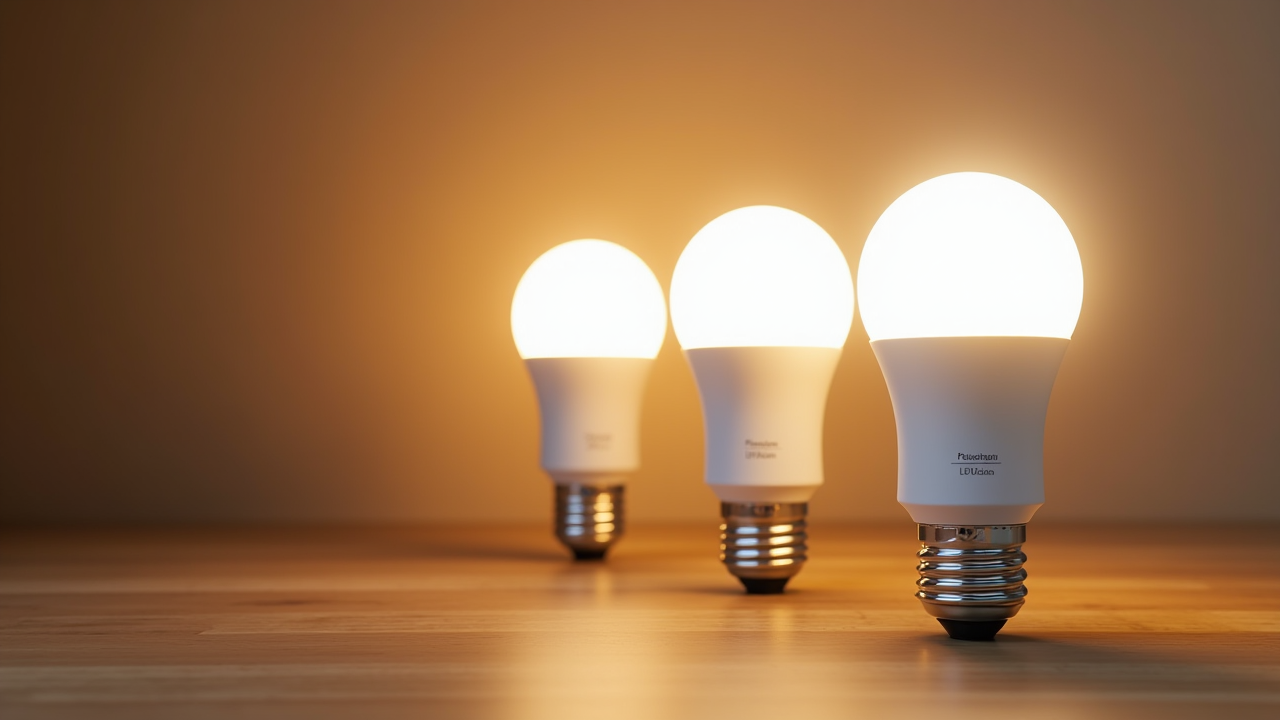
Color Rendering Index measures how accurately a bulb shows real colors versus sunlight. Sun is 100; incandescent is 95-100; standard LED is 75-80; high-CRI LED is 90+.
For most rooms, CRI 80+ is fine. Areas where CRI matters more:
- Kitchens (food appearance)
- Bathrooms (skin tones, makeup application)
- Closets and dressing areas (clothing color matching)
- Art display
- Home offices (long-duration eye comfort)
CRI by smart bulb (manufacturer claims, verified by independent testing):
| Bulb | Stated CRI | Tested CRI |
|---|---|---|
| Philips Hue | 80 (color) / 90+ (white-only) | 84-92 |
| Wyze Color | 80 | 76-78 |
| Sengled | 80 | 79-83 |
| Govee | 80 | 76-82 |
| Cync | 80 | 78-82 |
Hue runs slightly higher than alternatives, especially in white-only modes. Difference is most visible in bathrooms and kitchens.
Reliability — the long-term story
Wirecutter and Consumer Reports both track multi-year smart-home reliability. Patterns:
Cheap white-only bulbs ($5-10 from random brands): 18-30% failure rate within 24 months per CR member surveys. App support often abandoned 18-24 months in. Avoid.
Mid-tier branded ($14-25 from Wyze, Sengled, Govee): 8-12% failure rate within 36 months. App actively maintained. Mostly LED driver failures, occasional firmware lockup. Good value.
Premium Hue ($25-50): 4-6% failure rate within 5 years. App and firmware actively maintained 10+ years (original Hue bulbs from 2012 still receive updates). Most failures are individual driver circuits, not platform abandonment.
The pattern: spending $14 vs $5 dramatically reduces failure rate; spending $50 vs $14 buys ecosystem stability and longer support, less direct LED reliability gain.
Ecosystem decision
Your existing smart-home ecosystem matters more than absolute bulb specs.
If you’re an Apple Home household
- Best fit: Hue (has matured native HomeKit support since 2016)
- Acceptable: Sengled Wi-Fi bulbs (have HomeKit), newer Matter bulbs
- Skip: Wyze (Alexa/Google only, no HomeKit), Cync (limited HomeKit)
If you’re a Google Home household
- Best fit: any of the five top picks — all support Google Assistant
- Hue strongest for “all colors at once” type complex commands
If you’re an Amazon Alexa household
- Best fit: any of the five top picks
- Wyze has tightest Alexa integration (Wyze owns subprocessor for some Alexa skills)
If you don’t use voice assistants
- Best fit: Hue with Bridge (best app), or Wyze (cheapest functional setup)
- Skip Cync (the C by GE rebrand has had app stability issues)
Matter — the unifying standard
Matter, launched 2022 and matured 2023-2024, is the unified smart-home standard backed by Apple, Google, Amazon, and Samsung. Matter-compatible devices work natively with all major hubs without bridges.
Current state for smart bulbs:
- Wyze Bulb Color — Matter version released 2024
- Sengled — multiple Matter SKUs since 2023
- Hue — Bridge 2 added Matter support 2023; bulbs work via Bridge
- Govee — selective Matter rollout 2024
- Cync — Matter rollout in progress
Matter advantages:
- One bulb works with all major hubs
- Local control (no cloud dependency)
- Faster response than cloud-based Wi-Fi
Matter limitations (2024 reality):
- Color sync across multiple bulbs less reliable than within-ecosystem (Hue-to-Hue still smoother than Hue-to-Wyze via Matter)
- Advanced features (effects, scenes, music sync) lag native ecosystem support
- Matter setup occasionally requires factory reset and reconfiguration
For 2025+ buyers, prioritize Matter-compatible bulbs to future-proof. Expect occasional rough edges as the standard matures.
Real-world cost comparison
Whole-home retrofit (15 bulbs) cost over 5 years:
| Setup | Bulb cost | Bridge | 5-yr replacement | Energy (5yr) | Total |
|---|---|---|---|---|---|
| 15 Wyze Color | $225 | $0 | ~$45 (2 fail) | $11 | $281 |
| 15 Sengled Wi-Fi | $270 | $0 | ~$30 (1 fails) | $11 | $311 |
| 15 Hue (white+color) | $675 | $60 | ~$30 (1 fails) | $11 | $776 |
| 15 Hue White (cheaper Hue) | $375 | $60 | ~$15 (0-1 fail) | $11 | $461 |
The 5-year cost gap between Wyze ($281) and Hue Color ($776) is meaningful — $495 over 5 years. The question is whether the daily-use experience over those 5 years justifies $99/year premium.
For most users with 1-3 smart bulbs in one room, Wyze is the right answer. For 15+ bulbs, Hue White (or White+Color where you actually want color) gets meaningful daily value from the better app, faster response, and ecosystem maturity.
Practical recommendations
Just exploring (1-3 bulbs): Buy 2-3 Wyze Color bulbs. Total: $30-50. No bridge. Works with Alexa/Google. Decide if you want more.
Single-room enthusiast (5-8 bulbs in one room): Either: 5-8 Wyze color ($75-125, no bridge, simple), or Hue starter kit + 3-6 add-ons ($200-300, much better experience for entertainment scenes and dimming).
Whole-home commitment (15+ bulbs): Hue ecosystem. Bridge + bulbs. 90% white-only Hue (cheaper, $25-30 each); 10% White+Color in living room and bedroom. Total $400-600. Worth it for the daily reliability and ecosystem maturity.
Mixed ecosystem (already have Wyze cameras, want Wyze bulbs): Wyze Bulb Color across the home. Less polish, but tight integration with Wyze cameras and rules. Cheaper.
Bottom line
For 1-3 bulbs and casual use, Wyze captures 80% of the smart-bulb experience for 25% of the cost. For whole-home commitment with serious automation, scenes, and 5+ year horizon, Hue’s premium is real and worth it. The middle ground (Sengled, Govee) makes sense for specific niches: Sengled if you want HomeKit on a budget; Govee if color effects are your primary use case.
Matter compatibility should be on every 2025+ purchase decision, but expect rough edges as the standard matures.
For the broader smart-home decision flow, see smart thermostat ROI and smart locks compared.