Smart Humidifiers 2026 — Levoit, Dyson, and GoveeLife Compared
Cool mist vs evaporative vs warm mist humidifier technologies compared with smart auto-humidity control, tank capacity, and mineral handling across Levoit, Dyson, and GoveeLife smart humidifiers.
Indoor humidity is one of the most underrated environmental factors. ASHRAE and EPA both recommend 30-50% relative humidity for indoor air quality, and most U.S. homes spend significant winter time below that range as heating systems dry out the air. The complaints — dry skin, scratchy throats, static electricity, cracked wood furniture — are usually downstream of the same underlying problem. A humidifier that maintains 40-50% humidity reliably eliminates almost all of these symptoms.
Smart humidifiers add the auto-control layer that prevents the opposite problem: over-humidification, which encourages mold and dust mites. Without an auto-mode, a manual humidifier running too long in a closed bedroom can push humidity to 65-70%, which creates worse problems than the original dryness.
This article compares the three smart humidifier brands that own most of the U.S. market — Levoit, Dyson, and GoveeLife — with attention to the underlying humidification technology, smart-mode usefulness, and the maintenance requirements that determine long-term ownership experience.
- Ultrasonic vs evaporative vs warm mist — which technology suits your use case
- White mineral dust problem and how to avoid it
- Smart features that matter (auto-mode) and ones that do not
- Tank size and refill frequency considerations
- Top picks by room size and water-type
Three humidification technologies

Ultrasonic cool mist is the most common technology in consumer smart humidifiers. A high-frequency vibrating membrane creates a cool, visible mist. Pros: very quiet, energy-efficient, fast to start producing output. Cons: aerosolizes minerals in tap water as “white dust” that settles on furniture and can be inhaled. Solution: use distilled water or a demineralization cartridge.
Evaporative cool mist uses a fan to draw air through a wet wick filter. The water evaporates into the air, leaving minerals behind in the wick. Pros: no white dust regardless of water type, self-regulating (cannot over-humidify because evaporation slows as air saturates). Cons: louder than ultrasonic (fan noise), wick filters need periodic replacement.
Warm mist (steam) boils water to release steam. Pros: kills bacteria during boiling, no mineral dust, no wick filters. Cons: uses significantly more energy, hot surfaces are a burn risk around children or pets, the wattage limits portability and some areas can have noticeable temperature increase.
For most households, evaporative is the safest default — no white dust risk, no over-humidification risk, no hot surfaces. The trade-off is fan noise. Ultrasonic is preferred for ultra-quiet bedrooms with distilled water available.
The white dust question

This is the issue most ultrasonic humidifier buyers do not see coming. When tap water contains dissolved minerals (calcium, magnesium, silica), an ultrasonic humidifier breaks the water into mist that carries those minerals with it. Once airborne, the minerals settle as fine white dust on furniture, electronics, and dark surfaces. Worse, the same minerals can be inhaled.
EPA’s guidance specifically addresses ultrasonic humidifier mineral content as a potential indoor air quality concern, particularly for sensitive individuals and infants. The CDC recommends distilled or demineralized water for ultrasonic humidifiers used in nurseries.
Three solutions:
- Use distilled water — eliminates the mineral problem entirely. Adds an ongoing cost of $1-2 per gallon for distilled water.
- Use a demineralization cartridge — some Levoit and Honeywell ultrasonic models accept these cartridges, which absorb minerals before aerosolization. Cartridge cost is $5-10 each, lasts 30-60 days depending on water hardness.
- Switch to an evaporative humidifier — no aerosolization means no white dust regardless of water type. Different humidifier, not a fix for an existing ultrasonic.
For homes with very hard water (250+ ppm total dissolved solids), even demineralization cartridges struggle. Evaporative humidifiers are the recommended technology in those regions.
Smart auto-mode — the feature that matters

The key smart-humidifier feature is auto-mode based on built-in humidity sensors. The humidifier adjusts output to maintain the target humidity range and stops when the target is reached.
Why this matters more than other smart features:
- Prevents over-humidification. Without auto-mode, manual humidifiers running on high in a closed room can push humidity above 60%, creating mold and dust-mite conditions.
- Tracks tank level remotely. Low-water alerts via app prevent the humidifier running dry (which can damage some ultrasonic transducers).
- Schedules around sleep. Auto-mode lowers output overnight and increases when household activity returns.
Voice control and ecosystem integration (Alexa, Google, HomeKit) are nice-to-have but most humidifier control happens via auto-mode, not manual commands. The auto-mode quality varies — Levoit’s hygrostat is generally accurate within a couple of percent of room hygrometer readings; cheaper humidifiers can drift further.
Tank size and refill frequency
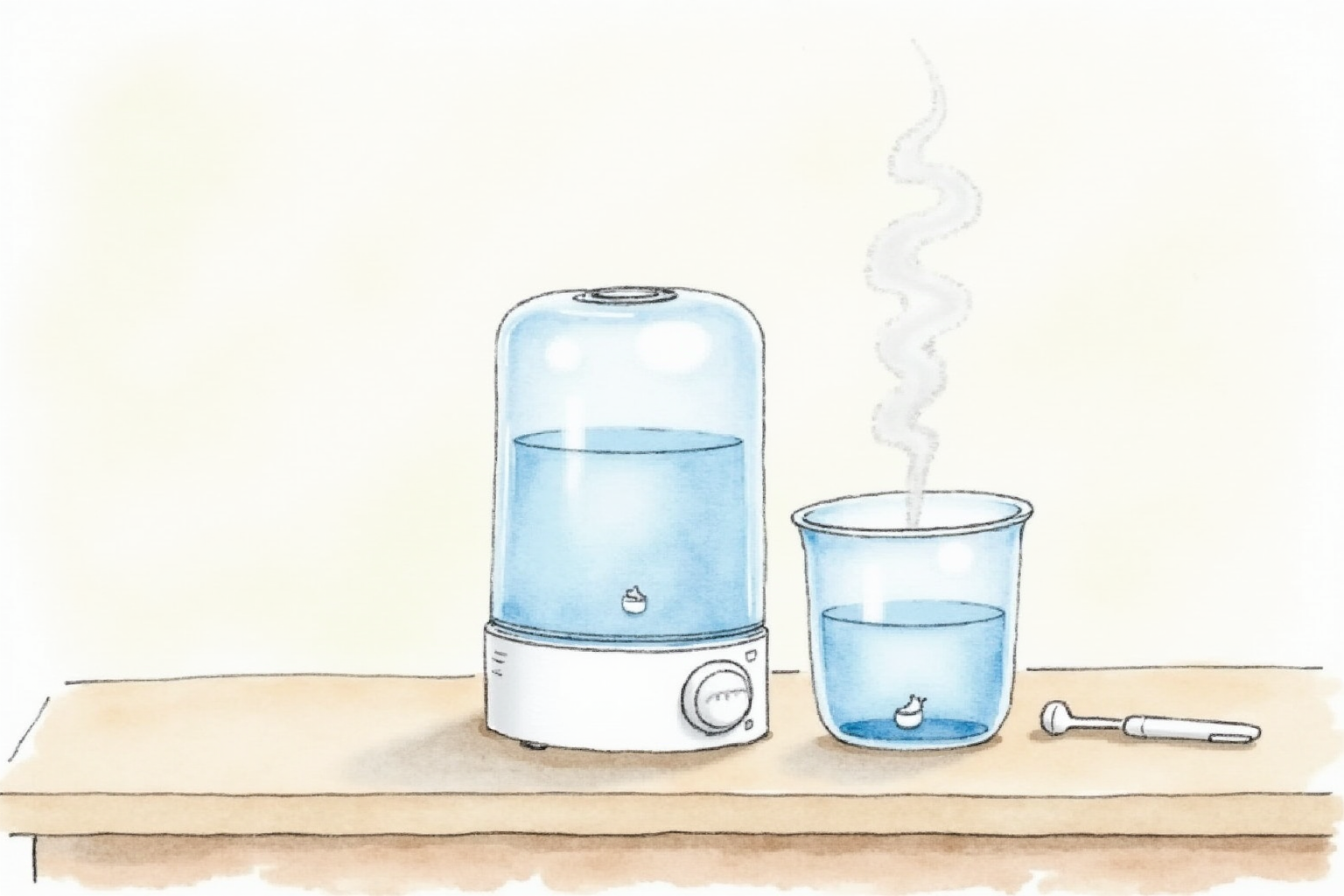
Tank capacity determines refill chore frequency, which in turn determines whether the humidifier gets used or sits in a closet:
- 1-2L tanks — personal / desk humidifiers. Daily refills.
- 4-6L tanks — mid-size room (bedrooms, offices). Every 2-3 days.
- 8-10L tanks — larger rooms (living rooms, master suites). Every 3-5 days.
- Whole-home humidifiers (installed) — connect to home water supply, no refills needed.
For frequent winter use, larger tanks pay back in convenience. Most people stop using a humidifier that requires daily refills within a few weeks.
Top picks by use case
Levoit Classic 200S Top-Fill Smart Humidifier (6L)
Price · $80-130 — best mainstream smart pick
+ Pros
- · Top-fill design eliminates the lift-the-tank refill step
- · Built-in humidity sensor with reliable auto-mode
- · Alexa, Google, VeSync app integration
− Cons
- · Ultrasonic — use distilled water or demineralization for best results
- · Not as quiet as the smaller Levoit personal models
Paid affiliate link. Price, availability, and ratings can change; verify details on the retailer page before buying.
Dyson Purifier Humidify+Cool (PH04)
Price · $700-900 — premium combined air purifier and humidifier
+ Pros
- · Combines air purification, humidification, and cooling in one unit
- · Evaporative technology — no white mineral dust
- · Strong Dyson app and Apple Home integration
− Cons
- · Premium price — significantly more than dedicated humidifiers
- · Larger physical footprint than purifier-only or humidifier-only models
Paid affiliate link. Price, availability, and ratings can change; verify details on the retailer page before buying.
GoveeLife Smart Humidifier (4L Cool Mist)
Price · $40-70 — budget smart pick
+ Pros
- · Lowest price among the smart humidifier category
- · Frequent Amazon sales at significant discounts
- · Govee app with auto-mode and scheduling
− Cons
- · Ultrasonic — white dust risk with tap water
- · Build quality not premium; expect shorter lifespan than Levoit
Paid affiliate link. Price, availability, and ratings can change; verify details on the retailer page before buying.
The buyer’s path
For most households, the Levoit Classic 200S or similar mid-tier smart humidifier is the right balance of features, capacity, and price. Pair with distilled water (or a demineralization cartridge) to avoid the white dust problem, and the auto-mode handles humidity control without manual intervention.
For households with severe hard water or where the white dust issue is unacceptable, an evaporative humidifier (Dyson PH04 or comparable Honeywell HCM-350 series) avoids the entire problem at the cost of fan noise and wick filter replacement.
For nurseries, follow CDC guidance: distilled water only with ultrasonic models, or use an evaporative humidifier with regular wick replacement. Avoid warm-mist (steam) humidifiers near children due to burn risk.
Avoid no-name humidifiers at the $20-30 tier. The tanks tend to develop mold quickly due to inadequate antimicrobial materials, the sensors are less accurate, and the warranty support is unreliable. The savings versus a Levoit or GoveeLife at $50-70 on sale are not worth the maintenance and health trade-off.
Cleaning discipline matters more than the brand. Every humidifier needs weekly cleaning with vinegar or manufacturer cleaner, daily tank emptying when not in use, and prompt wick replacement (for evaporative). Households that maintain this routine get years of clean humidification; households that skip it create the moldy-humidifier experience that drives the complaints on Amazon reviews.