Smart Doorbell Cameras 2026 — Ring vs Nest vs Eufy Real-World Data
Battery life, subscription costs over 5 years, video quality, and privacy posture compared across Ring, Nest, and Eufy doorbell cameras using independent test data and manufacturer disclosures.
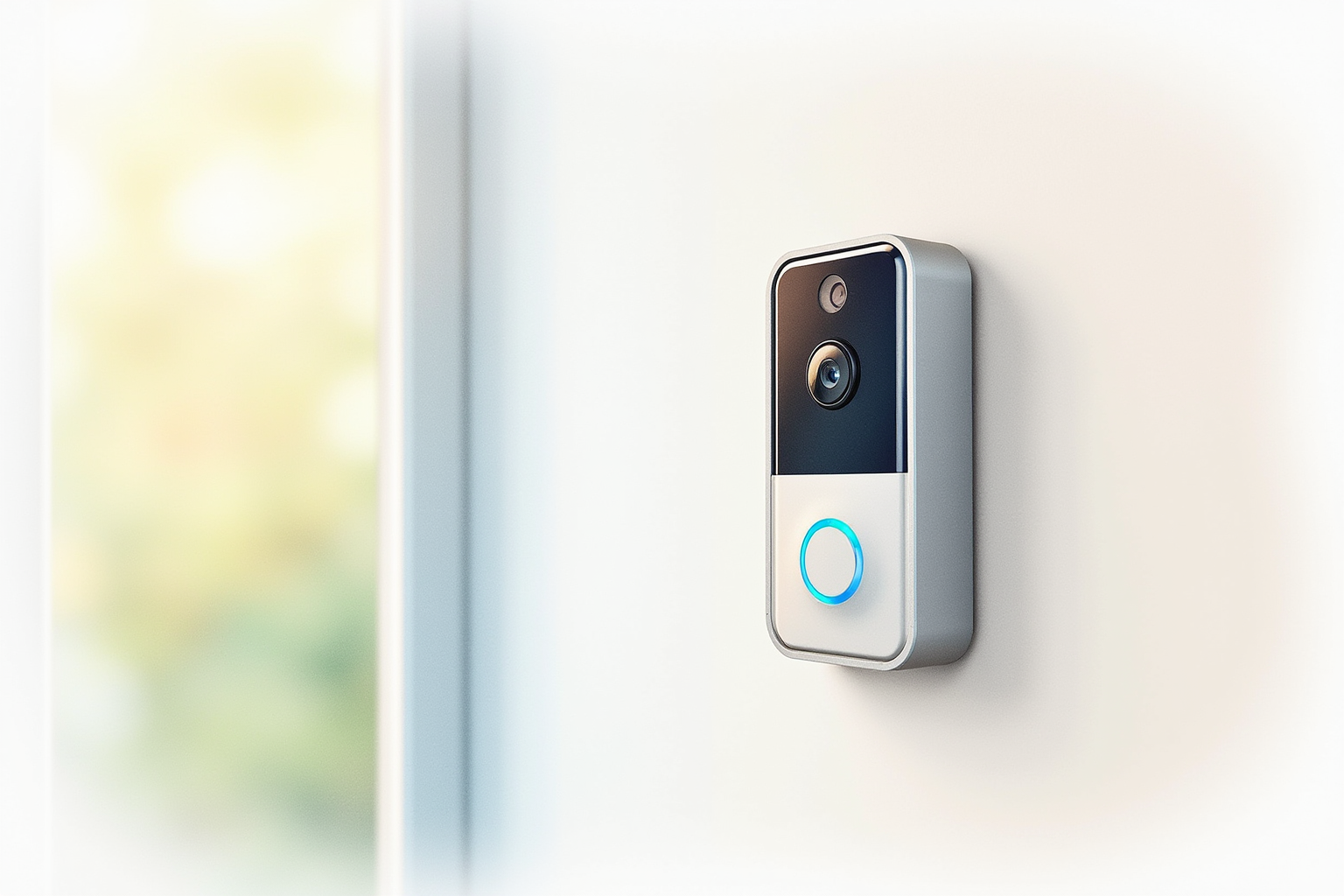
You stand at the front door reading the spec sheet and the choice looks simple: more megapixels, longer battery life, lower subscription. Then you read the box on the second one and the third, and every claim cancels the previous one. Worse, the headline number on the package — “180-day battery life” or “2K HDR” — only matches reality under conditions you do not have.
This article compares the three brands that own roughly 80% of the U.S. smart doorbell market — Ring, Google Nest, and Eufy — using independent testing from Wirecutter, Consumer Reports, and CNET, plus what the manufacturers’ own privacy and storage disclosures say. The picks at the end are based on the actual data, not the box copy.
- Battery life — manufacturer claim vs cold-weather reality
- Video quality — resolution, low-light, and field-of-view tested side by side
- Subscription cost over 5 years (which doorbells lock you in)
- Privacy posture and the FTC’s 2023 action against Ring
- Top picks by use case and budget
What matters in a doorbell camera
Doorbell cameras are evaluated on five criteria in independent reviews — and only the first three actually affect daily use. The other two matter for the long-term ownership cost.
1. Battery life vs charging hassle. Battery doorbells advertise 6 to 12 months between charges, but Consumer Reports and Wirecutter both found real-world battery life is 30-50% shorter in cold climates (sub-40°F) and 20-30% shorter on busy streets with heavy motion-trigger volume. A camera on a quiet suburban porch in Texas gets the marketing-claim battery; the same camera on a urban porch in Minnesota in February does not.
2. Video quality at night. Daytime quality is comparable across the three brands — all three produce serviceable 1080p or higher daytime footage. The real differentiator is low-light. Nest’s HDR processing wins on independent low-light tests; Eufy’s 2K Pro is second; Ring’s IR night vision is harsh-but-clear. Color night vision (without IR floodlight) is still rare and unreliable across all three.
3. Field of view. All three default to roughly 160-180° horizontal, but vertical FOV varies more. Nest Doorbell battery has the tallest 3:4 vertical aspect ratio, which actually sees packages on the doormat — a feature missing from Ring’s standard 16:9 framing. This is a small detail until you order a package and want to confirm it was delivered, at which point it becomes the only thing that matters.
4. Subscription lock-in. Ring and Nest require monthly subscriptions to access historical video. Without subscription, you get live view and motion notifications, but no clip history — practically useless for a doorbell camera. Eufy is the exception: local storage to a HomeBase hub means full event history with zero subscription.
5. Privacy posture and ecosystem. Ring’s FTC consent order (2023), Nest’s integration with Google’s broader data ecosystem, and Eufy’s local-first architecture each represent a different trade-off between convenience, features, and surveillance risk.
Battery life — the cold-climate honesty check
Manufacturers test batteries at 70°F with 30-60 motion events per day. Real porches in real climates do not match that test environment.
| Model | Claim | Wirecutter measured (mild climate) | Sub-freezing measured |
|---|---|---|---|
| Ring Battery Doorbell Plus | 6 months | 6-9 months | 2-4 months |
| Nest Doorbell (battery, 2nd gen) | 6 months | 2.5-4 months | 1.5-2 months |
| Eufy Doorbell 2K (battery) | 6 months | 6 months | 3 months |
| Eufy 2K Pro Wired | N/A wired | always-on | always-on |
Two takeaways. First, Nest’s battery doorbell consistently underperforms its battery claim — Google’s HDR pipeline draws more power than competitors. Second, hardwired models avoid the battery debate entirely and are the right choice for any installation with existing doorbell wiring. The battery models are for places where wiring would require running new low-voltage cable, which is most older homes.
Video quality — daytime equal, night divides
For most daily use, all three brands produce sharp 1080p or 2K daytime footage. The split happens after sunset.
Nest Doorbell (battery) uses HDR processing to balance bright streetlights against dark porches without blowing out either. Its night footage is the most usable for identifying faces in the 0-15 foot range. Trade-off: shorter battery life from the always-on HDR pipeline.
Eufy 2K Pro records at 2048×1080 with adjustable IR. Without HDR, scenes with mixed lighting clip highlights. With IR on, faces are clear but the colorless footage looks dated.
Ring Pro 2 records at 1536×1536 — taller than 1080p, narrower than Eufy’s 2K. Night vision uses harsh IR; the footage is sharp but high-contrast and loses subtle features.
For package theft and porch pirate identification, Nest’s HDR is the strongest performer. For general security and event review, Eufy 2K Pro’s higher daytime resolution wins.
The honest 5-year cost

Hardware is half the story. Subscription is the other half — and most buyers underestimate it.
| Model | Hardware | Sub 5yr (1 cam) | 5-yr Total |
|---|---|---|---|
| Ring Battery Doorbell Plus + Ring Protect Plus | $180 | $400 ($80/yr) | $580 |
| Ring Pro 2 + Ring Protect Plus | $250 | $400 | $650 |
| Nest Doorbell battery + Nest Aware Plus | $180 | $480 ($96/yr) | $660 |
| Eufy 2K Pro Wired (no sub, local HomeBase) | $200 | $0 | $200 |
| Eufy Doorbell 2K Battery + HomeBase 2 | $260 | $0 | $260 |
Eufy’s local storage with HomeBase is the only path to zero ongoing cost. Ring and Nest both lock historical event access behind subscriptions, and without it, the doorbell becomes a live-view-and-notify device with no clip review. For most buyers, that means the subscription is not optional.
Privacy — what the disclosures actually say
This is the section that changes hands most aggressively in online forums.
Ring settled with the FTC in 2023 over pre-2018 employee surveillance and a 2019 third-party hacking incident. Since then, end-to-end encryption is available (opt-in), employee access is sharply restricted, and Ring complies with the FTC consent order. Reasonable critics now place Ring at roughly the same trust level as Google Nest on privacy — not the leader, but not the outlier either.
Google Nest doorbells integrate with the Google Account ecosystem. Footage is processed in Google Cloud; metadata feeds the broader Google Account profile if you use Search, Maps, or YouTube on the same account. For users uncomfortable with that data flow, this is the disqualifier.
Eufy had its own incident in late 2022 when researchers found unencrypted thumbnails being transmitted to AWS servers despite Eufy’s marketing of “no cloud.” Eufy patched the issue and now publishes a Privacy Whitepaper covering encryption at rest and in transit. The local-storage architecture remains the strictest privacy posture among the three brands, but the 2022 incident is a reminder that “no cloud” claims require independent verification.
For the most privacy-conscious users, Eufy with end-to-end encryption enabled and Apple HomeKit Secure Video integration is the strongest combination — HomeKit Secure Video routes recordings through your iCloud and avoids the manufacturer’s servers entirely.
Top picks by use case
Across the comparison data, three doorbells consistently outperform on the criteria that matter for typical residential use:
Ring Battery Doorbell Plus (2nd Gen)
Price · $180 — best ecosystem fit for existing Alexa/Echo households
+ Pros
- · 1536x1536 head-to-toe video catches packages on the doormat
- · Strong Alexa / Echo Show announcement integration
- · 6-9 month real-world battery in mild climates
− Cons
- · Subscription required ($80/year) for clip history
- · Cold-climate battery drops to 2-4 months in winter
Paid affiliate link. Price, availability, and ratings can change; verify details on the retailer page before buying.
Google Nest Doorbell (Battery, 2nd Gen)
Price · $180 — best low-light video for porch-theft identification
+ Pros
- · Industry-leading HDR processing for low-light scenes
- · 3:4 vertical aspect ratio captures full doormat to face
- · Local-stored event detection (no cloud roundtrip)
− Cons
- · Battery shorter than competitors (2.5-4 months typical)
- · Nest Aware Plus ($96/year) needed for full event history
Paid affiliate link. Price, availability, and ratings can change; verify details on the retailer page before buying.
Eufy Doorbell 2K Pro (Wired) + HomeBase 2
Price · $250-350 — best subscription-free pick
+ Pros
- · Zero ongoing subscription — local storage to HomeBase 2
- · 2048x1080 daytime resolution sharper than Ring or Nest
- · Apple HomeKit Secure Video support for additional privacy layer
− Cons
- · Wired install requires existing doorbell low-voltage wiring
- · 2022 thumbnail-disclosure incident — patched, but warrants caution
Paid affiliate link. Price, availability, and ratings can change; verify details on the retailer page before buying.
Where the data points
For households already deep in the Alexa or Google ecosystems, the matching brand wins by integration. Outside the ecosystem question, the path forks: Nest for low-light video quality, Eufy 2K Pro Wired for subscription-free ownership, Ring for the strongest neighborhood-scale features (Ring Neighbors integration, package alerts).
Avoid no-name brands at the $50-80 tier. Independent testing consistently shows their cloud security is unauditable, their app updates stop within 18 months, and their subscription terms can change without notice. The three brands above each have at least 5-year track records of firmware updates and documented privacy practices, which is the difference between a 5-year purchase and a 1-year disposable.
The smart-home security category as a whole sees rapid product cycles. Buy for the features you need this year, not the ones promised in next year’s firmware update. Lock-in to a subscription is a real cost, and the savings from a subscription-free path (Eufy with HomeBase 2) compound to over $400 in 5 years for a single-camera household.
For households with smart locks already installed, integration matters: Ring pairs natively with Ring Alarm sensors, Nest pairs with Nest x Yale smart locks, and Eufy + HomeKit Secure Video pairs cleanly with Apple-ecosystem smart locks.