Smart Pet Feeders 2026 — PetSafe vs PetKit vs Petlibro Compared
Portion accuracy, food hopper capacity, app reliability, and camera-equipped feeder comparison across PetSafe Smart Feed, PetKit Fresh Element, and Petlibro automatic pet feeders.
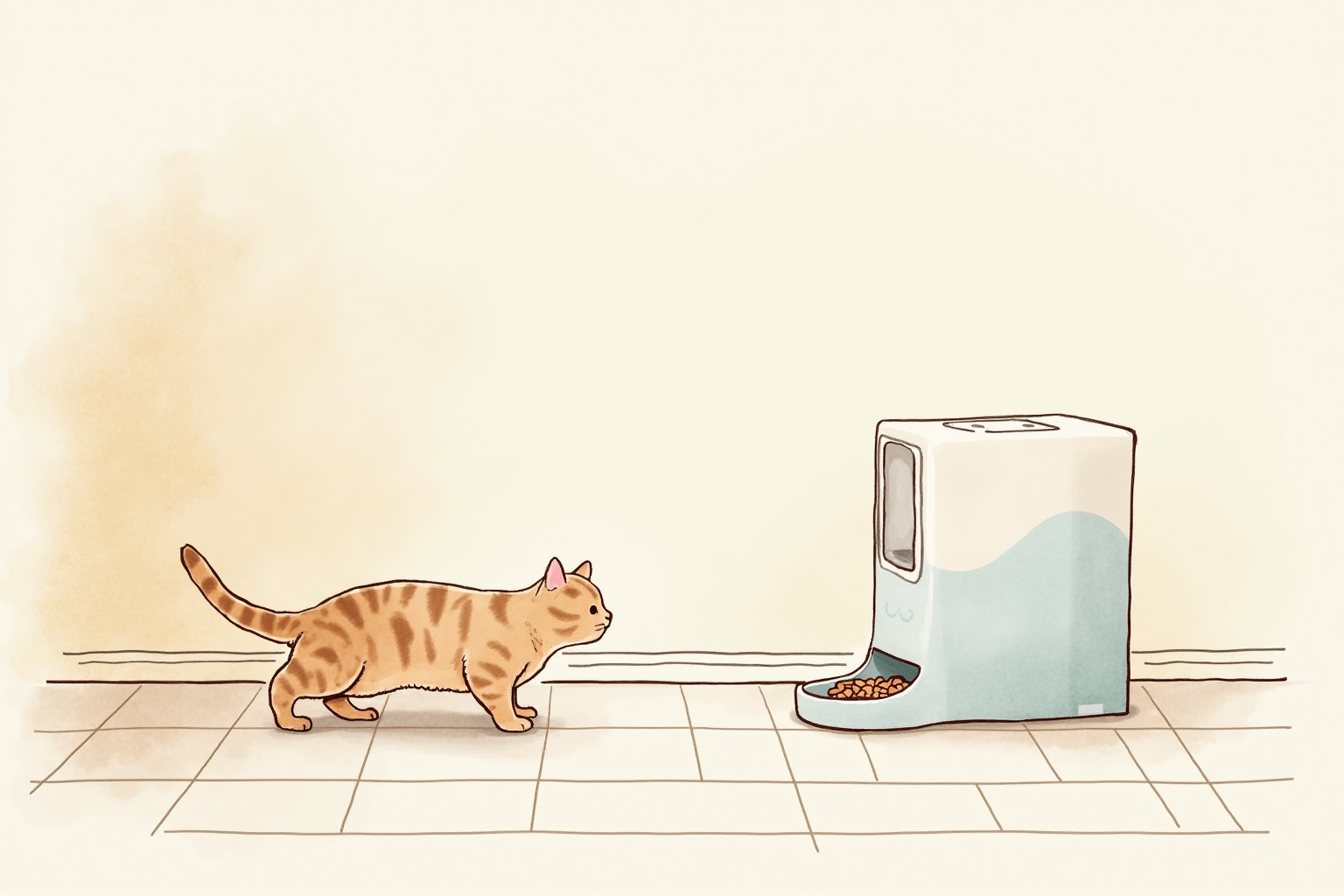
Smart pet feeders solve a category of problems that traditional gravity feeders cannot. Gravity feeders dispense food whenever the bowl empties — convenient, but ineffective for portion control, useless for delayed feeding schedules, and unable to track what or when the pet actually ate. Smart feeders add scheduling, portion control, and remote monitoring to the basic dispense function.
This article compares the three brands that own most of the U.S. smart pet feeder market — PetSafe, PetKit, and Petlibro — on the criteria that determine daily reliability: portion accuracy, hopper capacity, app stability, and the camera-equipped feeder option that has emerged as a meaningful sub-category.
- Portion accuracy and what fraction increments matter
- Hopper capacity and refill frequency for typical pets
- Power backup and what happens during outages
- Camera-equipped feeders and when they justify the premium
- Top picks by household size and pet count
Portion accuracy
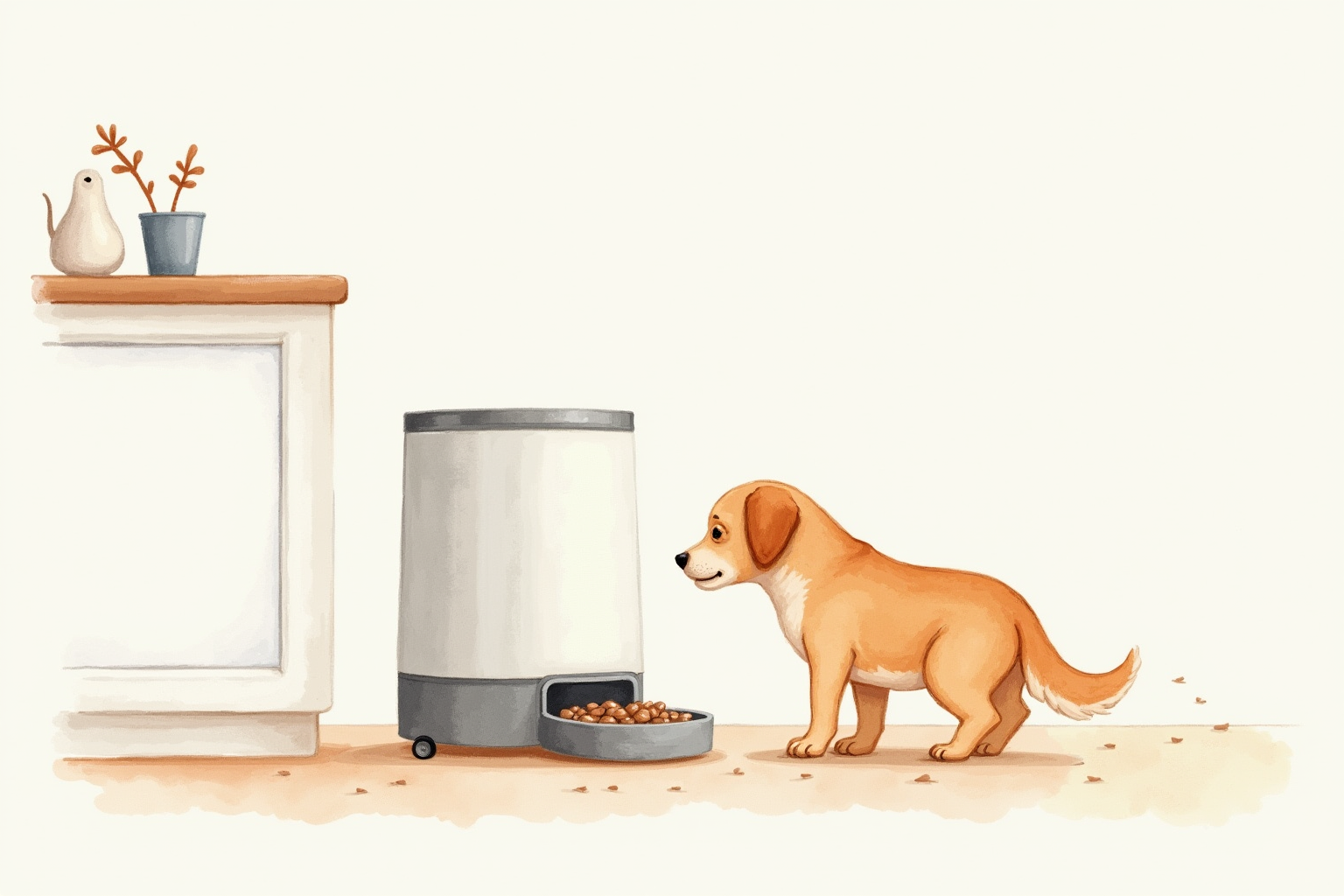
The single most important smart-feeder spec is portion accuracy. Veterinary recommendations for portion control specify daily calorie intake to within ±50-100 kcal for healthy weight management, and prescription diets are stricter. Feeders that deliver inconsistent portions defeat the entire purpose of automated feeding.
Quality smart feeders measure portions in cup fractions, typically with 1/8 cup minimum increments. The internal mechanism is either:
- Auger-based — a screw conveyor pushes food up and out. Reliable for dry kibble, can jam with oily food or large irregular pieces.
- Disc rotation — a rotating disc with calibrated cavities. More consistent portion size, but slightly more complex mechanism.
- Gravity gate — measured doses drop from the hopper when a gate opens. Simplest, generally accurate within reasonable tolerances.
For most households, any premium feeder’s portion accuracy is sufficient. The accuracy claims to verify are at the very small portion sizes (1/8 cup, 1/4 cup) — small portions amplify percentage error. Weigh a few portions on a kitchen scale during initial setup to confirm the feeder’s calibration matches your food’s bulk density.
Hopper capacity and refill schedule
Hopper capacity determines refill frequency:
- 2-3 liter hoppers — small / personal feeders. Refill every 3-5 days for a typical cat or small dog.
- 5-6 liter hoppers — mid-size. Refill every 7-10 days for typical pets.
- 10+ liter hoppers — large-capacity. Two to three weeks between refills for typical pets.
Larger hoppers are convenient but require attention to food freshness — kibble in a partially-used hopper can go stale after 2-3 weeks of intermittent exposure. FDA guidance recommends storing pet food in airtight containers and using opened bags within 4-6 weeks. Match the hopper size to refill cadence that fits within that window.
Power backup and outage handling
Smart feeders connected to mains power need a backup plan. Quality feeders include battery backup — typically D-cell batteries that keep the scheduled feeding going for several days during a power outage. WiFi features stop without internet, but the local schedule and dispensing continue.
Budget feeders often skip battery backup. The savings are real, but the failure mode (pet not fed during power outage) defeats the purpose. Verify battery backup specifically before purchase. The PetSafe Smart Feed and PetKit Fresh Element both include backup; some Petlibro models do as well, some do not.
For households in regions with frequent outages, prefer the larger battery backup (multi-day capacity).
Camera-equipped feeders
A recent product category combines feeder + camera + 2-way audio. The use case: traveling owners can see the pet during feeding, verify the food was dispensed, and speak to the pet. Useful sub-features:
- Two-way audio — call the pet to the feeder, verify they came
- Motion detection — alerts when the pet approaches/eats
- Treat dispensing — separate compartment for high-value treats triggered manually
- Cloud video storage — record feeding events for review
Cost premium: $50-100 over equivalent camera-less feeders. Justified for:
- Travelers who are away multiple days per month
- Owners of pets with separation anxiety
- Multi-pet households where pet ID matters
- New pet adoption (verifying the pet eats and adjusts)
Not justified for: single-pet households where the owner is home most of the time.
Top picks by household profile
PetSafe Smart Feed Automatic Feeder
Price · $180-230 — most established brand pick
+ Pros
- · Reliable hopper design with stainless steel bowl
- · Battery backup keeps schedule during power outages
- · PetSafe is the longest-established brand in the category
− Cons
- · No built-in camera (use a separate pet camera for that)
- · App less polished than newer competitors
Price, availability, and ratings can change; verify details on the retailer page before buying.
PetKit Fresh Element Solo Smart Feeder
Price · $130-180 — best mainstream feature-feeder
+ Pros
- · Polished app and reliable WiFi connectivity
- · Compact design fits most kitchen counters
- · Strong battery backup with low-battery notifications
− Cons
- · PetKit ecosystem requires PetKit app account
- · Smaller hopper than premium alternatives
Price, availability, and ratings can change; verify details on the retailer page before buying.
Petlibro Granary Camera Smart Pet Feeder (5L)
Price · $130-180 — best camera-equipped feeder
+ Pros
- · Built-in 1080p camera with night vision and 2-way audio
- · 5L hopper handles typical pet for 7-10 days
- · Strong app for camera viewing and feeding control
− Cons
- · Camera adds privacy considerations — review camera-cloud policies
- · Brand is younger than PetSafe; long-term firmware support less established
Price, availability, and ratings can change; verify details on the retailer page before buying.
The buyer’s path
For most single-pet households where the owner is home most days, the PetSafe Smart Feed is the reliable default — established brand, proven hardware, battery backup, no camera needed. The PetKit Fresh Element Solo is the slightly more polished alternative at a lower price.
For travelers, multi-pet households, or new pet owners, the Petlibro Granary Camera-equipped feeder adds genuine value through the camera and 2-way audio features. The premium is reasonable for the added functionality.
For multi-pet households where one pet steals from another or one pet is on a prescription diet, consider a microchip-recognizing feeder (SureFeed) instead. The category-specific feature solves a problem that general smart feeders cannot.
Avoid no-name feeders at the $40-60 tier. The portion accuracy is typically poor, the auger jams frequently with bulk-bin kibble, and the app stability is unreliable. Pet feeders are one of the categories where reliability matters most — the consequence of failure (pet not fed) is not acceptable. Stick with established brands.
Combined with smart cat water fountains (covered in the cat water intake article), the smart pet care stack covers the recurring daily needs while you are home or away. The setup cost pays back in convenience over months of daily use, and the food portion control supports the broader pet health goals around weight management and routine.
With this last addition, the homesmartly smart-home coverage reaches the full breadth — climate control, security, safety, convenience, environment, and pet care — that defines a complete connected home in 2026.